LOADING CONSTELLATION

Live Starlink Constellation Tracker

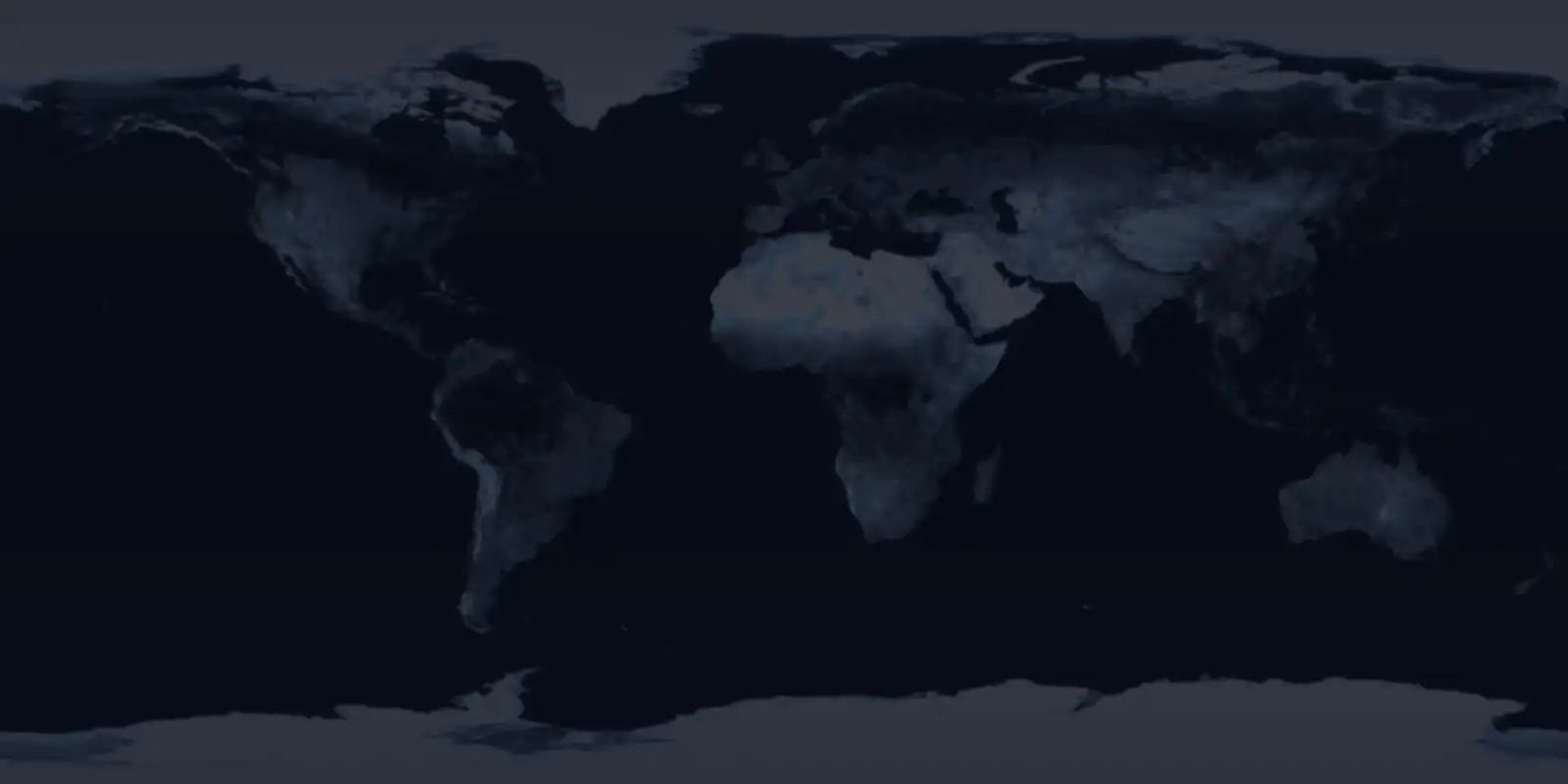
Watch every active Starlink satellite move across Earth in real time. The view above propagates the current position of around 6,000 satellites using SGP4 orbital mechanics, seeded from the latest Two-Line Element catalogue published by Space-Track.org and refreshed on screen every 30 seconds. Switch between the photorealistic 3D globe and the 2D map using the toggle at the top right of the view.

Trusted by over 1.1 million space enthusiasts worldwide in recent months.

TLE catalogue refreshed from Space-Track every 12 hours. Page last reviewed .

About the Starlink constellation

Starlink is SpaceX's low Earth orbit broadband internet service. The first operational satellites launched in May 2019 and the constellation has grown faster than any other group of satellites in history. Each spacecraft is a flat-panel design weighing roughly 260 to 800 kilograms depending on the generation, packed dozens at a time into the Falcon 9 fairing and dispensed in orbit from a stacked configuration. The operational altitude sits about 130 km above the International Space Station, which itself orbits at roughly 420 km.

The constellation is organised into orbital shells at altitudes near 540, 550, and 570 kilometres, with inclinations ranging from 53 degrees up to a near-polar 97.6 degrees so that ground coverage extends across populated latitudes. New launches add roughly 20 to 60 satellites at a time, while older units are deliberately deorbited at end of life so that atmospheric drag pulls them down within a few years rather than leaving long-lived debris in orbit.

Each Starlink satellite carries krypton-fuelled Hall-effect ion thrusters that it uses to climb from the deployment altitude to its operational orbit, perform collision avoidance manoeuvres, and eventually lower itself back into the atmosphere when retired. Later generations carry inter- satellite laser crosslinks at 200 Gbps so that traffic can traverse the constellation without touching a ground gateway, which is what makes coverage possible over oceans and polar regions where no ground stations exist.

The view above pulls the full Starlink catalogue from Space-Track.org through our own caching layer so that your browser only makes a single bulk request rather than thousands of individual ones. Positions are then computed locally with SGP4, the same propagation model used by professional pass prediction tools, and rendered as a single batched draw call so that the page stays smooth even with the entire constellation on screen at once. If you want to know when a specific satellite will fly over your location, try our Next Pass tool.

Frequently asked questions

What is Starlink?

Starlink is a satellite internet constellation operated by SpaceX. It uses thousands of small satellites in low Earth orbit to deliver low-latency broadband to ground users almost anywhere on the planet. Each satellite carries phased-array antennas, krypton-fuelled ion thrusters, and inter-satellite laser links that route traffic across the constellation without touching ground stations.

How many Starlink satellites are in orbit?

There are currently around 6,000 active Starlink satellites in orbit, with new batches launched roughly every week on Falcon 9 rockets. SpaceX has regulatory approval to operate up to 12,000 satellites and has filed for as many as 42,000 in total, which would make Starlink the largest artificial constellation by an order of magnitude.

How high do Starlink satellites orbit?

Most operational Starlink satellites fly at about 550 km altitude in several shells of slightly different inclinations, roughly 130 km above the International Space Station. The low altitude is deliberate: it keeps round-trip latency to ground users around 25 to 50 milliseconds, and it ensures that any failed satellite re-enters the atmosphere within five years through natural drag instead of becoming long-lived debris.

How fast do Starlink satellites move?

At 550 km altitude a Starlink satellite travels at roughly 27,000 km/h (about 7.5 km per second) and completes one orbit of Earth in just over 95 minutes. That is why the dots on the map and globe above appear to slide across the planet in real time, even with a 30 second update interval.

Why are astronomers concerned about Starlink?

Starlink satellites can be visible from the ground as bright moving streaks, particularly shortly after launch and around twilight. Long-exposure astronomical images frequently show satellite trails crossing the field of view, and the cumulative radio emissions from the constellation interfere with sensitive observatories. SpaceX has experimented with darker coatings (DarkSat) and sun visors (VisorSat) to reduce optical brightness, but the sheer number of objects in orbit makes some level of impact unavoidable.

Where does this tracking data come from?

Every satellite shown above is propagated from an official Two-Line Element (TLE) set published by Space-Track.org, operated by the U.S. Space Force 18th Space Defense Squadron. Our backend pulls the full Starlink TLE catalogue from Space-Track every 12 hours, caches it, and serves it to your browser through a single batched API call. Positions are then computed locally using the SGP4 orbital model and refreshed on screen every 30 seconds.