

LOADING MAP
Live International Space Station Tracker
Track the International Space Station in real time. The map above shows the current position of the ISS updated multiple times per second using professional-grade SGP4 orbital propagation seeded with the latest Two-Line Element data published by Space-Track.org. The telemetry bar at the foot of the map carries the live latitude, longitude, altitude, velocity, visibility and ground location.
ISSINFO is a real-time space tracking platform. Beyond the ISS, explore Starlink, satellites, Artemis Moon missions, the astronauts in orbit right now, solar and lunar transits, and the latest space news.
Trusted by over 1.1 million space enthusiasts worldwide in recent months.
About the International Space Station
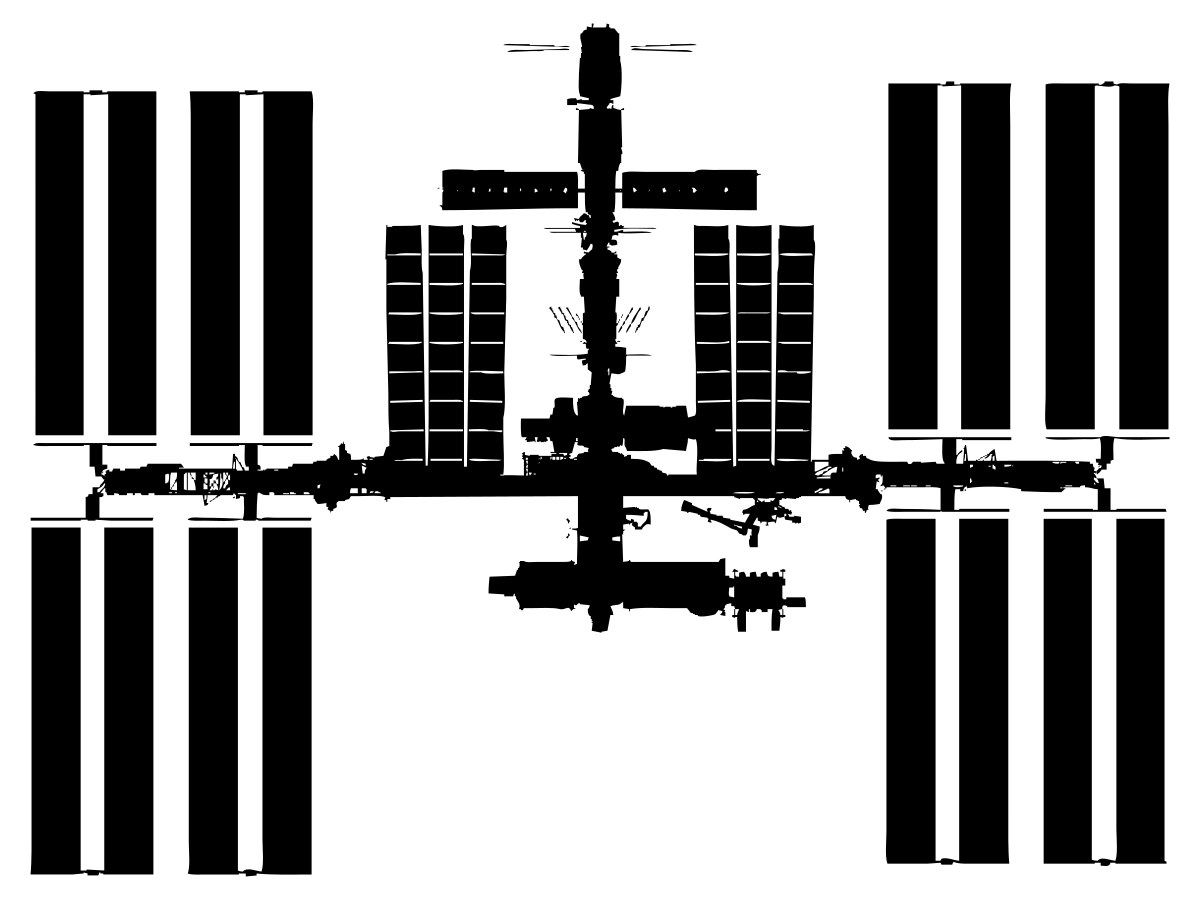
The International Space Station is the largest crewed object ever placed into orbit. Construction began in 1998 and the station has been continuously inhabited since November 2000, making it one of the longest-running scientific platforms in human history. It is a joint project between NASA, Roscosmos, ESA, JAXA, and CSA, and orbits in Low Earth Orbit at an altitude that varies between roughly 400 and 420 kilometres.
At its orbital speed of about 28,000 km/h the ISS completes one revolution of Earth every 90 minutes. This is why the crew witness sixteen sunrises and sunsets in a single day, and why the station is sometimes visible from a given location for several minutes at a time, only to disappear and return again roughly an hour and a half later. Atmospheric drag slowly lowers the orbit, so visiting cargo vehicles periodically perform reboost burns to maintain altitude.
This tracker shows the live position of the station using SGP4 orbital propagation seeded with the most recent Two-Line Element set published by Space-Track.org. Position is updated multiple times per second on the map above. The same propagation runs on our backend, allowing pass predictions and historical ground tracks for any visible pass from your location.
Frequently asked questions
- Where is the International Space Station right now?
- The ISS orbits Earth roughly every 90 minutes, so its position changes constantly. The live map at the top of this page shows the current position updated several times per second using SGP4 orbital propagation seeded from official Two-Line Element data published by Space-Track.org.
- How high does the ISS orbit?
- The International Space Station orbits at approximately 400 to 420 km (250 to 260 miles) above Earth. The altitude varies slightly because of atmospheric drag and is periodically raised by thruster firings called reboosts.
- How fast does the ISS travel?
- The ISS moves at roughly 28,000 km/h (17,500 mph). At that speed it completes one full orbit of Earth every 90 minutes, which means the crew sees about 16 sunrises and sunsets every 24 hours.
- How many people are on the ISS right now?
- The ISS typically hosts a crew of six to seven astronauts from NASA, ESA, Roscosmos, JAXA, and partner agencies. The exact number changes during crew rotation missions when arriving and departing crews briefly overlap aboard the station.
- Can I see the ISS from my house?
- Yes. The ISS is the third-brightest object in the night sky and is easily visible to the unaided eye when conditions are right. Use our Next Pass tool to find the next time it will be visible from your specific location, including the time, direction, and how high it will rise.
- Where does the data on this site come from?
- Orbital data (TLEs) come from Space-Track.org, operated by the U.S. Space Force 18th Space Defense Squadron. Crew information is published by Open Notify and SpaceDevs Launch Library. Pass predictions are computed in-house from the same TLEs using the SGP4 model. We propagate the ISS position on both server and client for accurate, low-latency tracking.